Buy brezovka.eu ?
We are moving the project
brezovka.eu .
Are you interested in purchasing the domain
brezovka.eu ?
domain@kv-gmbh.de · 0541-91531010
Buy brezovka.eu ?
How can one recognize proportionality and inverse proportionality?
Proportionality can be recognized when two quantities change in the same direction. This means that as one quantity increases, the other also increases, and as one quantity decreases, the other also decreases. Inverse proportionality, on the other hand, is recognized when two quantities change in opposite directions. This means that as one quantity increases, the other decreases, and vice versa. One can recognize proportionality and inverse proportionality by observing the relationship between the two quantities and determining if they change in the same or opposite directions as they vary. **
How do you differentiate between inverse proportionality and direct proportionality?
Inverse proportionality is when one variable increases as the other variable decreases, and vice versa. This can be represented by the equation xy = k, where k is a constant. Direct proportionality, on the other hand, is when both variables increase or decrease together at a constant ratio. This can be represented by the equation y = kx, where k is a constant. Inverse proportionality is characterized by the product of the two variables being constant, while direct proportionality is characterized by the ratio of the two variables being constant. **


Similar search terms for Proportionality
Top-Angebote
Products related to Proportionality:
-
Inspired Finds Rustic Wooden Christmas House Pendant Cozy Mini Cabin Tree Ornament rustic CabinAdd a touch of warmth and nostalgia to your holiday decor with this charming wooden Christmas ornament. Designed as a miniature log house, it brings a cozy, storybook feel to your tree, instantly creating a welcoming festive atmosphere. Crafted from...35,99 $*Shipping: 0,00 $Secure redirect to the provider
-
Uplift Treasures Rustic Bear Metal Wall Art Cabin Decor Rustic Bear Metal Wall Art Cabin DecorProduct Description:Bring the spirit of the wilderness into your home with this rustic bear wall dcor. Featuring a striking metal silhouette of a bear surrounded by pine trees, it adds a bold and natural charmperfect for cabins, lodges, or...73,97 $*Shipping: 0,00 $Secure redirect to the provider
-
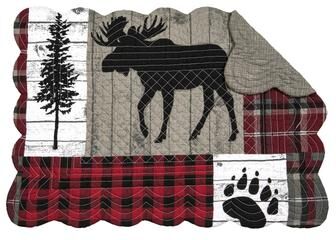
C&F Home Hayden Placemat Set of 6 Lodge Cabin Nature Rustic Gray and Red Patchwork Pattern Cotton ReversibleWith a classic printed patchwork of wilderness motifs and coordinating red plaids, the Hayden tabletop collection brings a touch of rustic lodge style to any dining room.54,00 $*Shipping: 0,00 $Secure redirect to the provider
-
Saro "Winter Pine Tree Table Runner - Rustic Christmas Tree Forest Design for Holiday Dining & Cabin Lodge Entertaining - 16""x72"""Bring the beauty of a winter forest to your holiday decor with this Winter Pine Tree Table Runner featuring an allover evergreen tree pattern inspired by rustic woodland landscapes.48,49 $*Shipping: 0,00 $Secure redirect to the provider



-
What does proportionality mean?
Proportionality refers to the concept of maintaining a balanced and harmonious relationship between different parts or elements of a whole. It involves ensuring that the size, quantity, or degree of one component is appropriate in relation to another component. In various contexts, proportionality can also refer to the idea of fairness, reasonableness, or appropriateness in the way resources, actions, or decisions are allocated or distributed. Overall, proportionality emphasizes the importance of maintaining a sense of equilibrium and consistency in relationships, actions, or outcomes. **
-
What is the difference between proportionality theorem 1 and proportionality theorem 2?
Proportionality theorem 1 states that if a line is parallel to one side of a triangle and intersects the other two sides, it divides those sides proportionally. Proportionality theorem 2, on the other hand, states that if a line divides two sides of a triangle proportionally, then it is parallel to the third side of the triangle. In essence, theorem 1 deals with parallel lines and their proportional divisions within a triangle, while theorem 2 deals with proportional divisions and the parallelism of lines within a triangle. **
-
What is an indirect proportionality?
An indirect proportionality is a relationship between two variables where as one variable increases, the other variable decreases at a constant rate. This means that when one variable goes up, the other variable goes down, and vice versa. In an indirect proportionality, the product of the two variables remains constant. This type of relationship is often represented by a hyperbolic curve on a graph. **
-
What is a proportionality table?
A proportionality table is a tool used to show the relationship between two quantities that are directly proportional to each other. It lists the values of the two quantities in separate columns, and then shows their corresponding ratios in a third column. This helps to visually demonstrate how the two quantities change in relation to each other. **


What is proportionality in physics?
Proportionality in physics refers to the relationship between two quantities where one quantity changes in direct proportion to the other. This means that as one quantity increases or decreases, the other quantity changes by a consistent factor. Mathematically, this relationship can be expressed as y = kx, where y and x are the two quantities, and k is the constant of proportionality. Understanding proportionality is important in physics as it helps in analyzing and predicting the behavior of physical systems. **
What is direct and indirect proportionality?
Direct proportionality is when two quantities increase or decrease at the same rate, meaning as one quantity increases, the other also increases, and vice versa. Indirect proportionality, on the other hand, is when one quantity increases while the other decreases, or vice versa. In direct proportionality, the ratio of the two quantities remains constant, while in indirect proportionality, the product of the two quantities remains constant. **
Top-Angebote
Products related to Proportionality:
-
Inspire Essentials Rustic Bear Metal Wall Decor For Cabin Lodge And Nature Inspired Homes Rustic Bear Metal Wall Decor For Cabin Lodge And Nature Inspired HomesBring the spirit of the wild into your home with this striking bear wall decor designed to capture the beauty of nature. Crafted with a bold silhouette and forest inspired details, it creates a warm and rugged atmosphere perfect for cozy interiors....34,98 $*Shipping: 0,00 $Secure redirect to the provider
-
Uplift Curations Rustic Metal Bear Wall Decor Cabin Lodge Forest Animal Wall Art For Home & Outdoor Spaces Rustic Metal Bear Wall Decor Cabin Lodge Forest Animal Wall Art For Home & Outdoor SpacesBring the wild beauty of nature into your home with this striking bear wall decor designed to capture the spirit of the forest. Crafted with intricate detailing, this metal bear wall art features a bold silhouette surrounded by trees and mountain...90,00 $*Shipping: 0,00 $Secure redirect to the provider
-
Inspired Finds Rustic Wooden Christmas House Pendant Cozy Mini Cabin Tree Ornament rustic CabinAdd a touch of warmth and nostalgia to your holiday decor with this charming wooden Christmas ornament. Designed as a miniature log house, it brings a cozy, storybook feel to your tree, instantly creating a welcoming festive atmosphere. Crafted from...35,99 $*Shipping: 0,00 $Secure redirect to the provider
-
Uplift Treasures Rustic Bear Metal Wall Art Cabin Decor Rustic Bear Metal Wall Art Cabin DecorProduct Description:Bring the spirit of the wilderness into your home with this rustic bear wall dcor. Featuring a striking metal silhouette of a bear surrounded by pine trees, it adds a bold and natural charmperfect for cabins, lodges, or...73,97 $*Shipping: 0,00 $Secure redirect to the provider
-
How can one recognize proportionality and inverse proportionality?
Proportionality can be recognized when two quantities change in the same direction. This means that as one quantity increases, the other also increases, and as one quantity decreases, the other also decreases. Inverse proportionality, on the other hand, is recognized when two quantities change in opposite directions. This means that as one quantity increases, the other decreases, and vice versa. One can recognize proportionality and inverse proportionality by observing the relationship between the two quantities and determining if they change in the same or opposite directions as they vary. **
-
How do you differentiate between inverse proportionality and direct proportionality?
Inverse proportionality is when one variable increases as the other variable decreases, and vice versa. This can be represented by the equation xy = k, where k is a constant. Direct proportionality, on the other hand, is when both variables increase or decrease together at a constant ratio. This can be represented by the equation y = kx, where k is a constant. Inverse proportionality is characterized by the product of the two variables being constant, while direct proportionality is characterized by the ratio of the two variables being constant. **
-
What does proportionality mean?
Proportionality refers to the concept of maintaining a balanced and harmonious relationship between different parts or elements of a whole. It involves ensuring that the size, quantity, or degree of one component is appropriate in relation to another component. In various contexts, proportionality can also refer to the idea of fairness, reasonableness, or appropriateness in the way resources, actions, or decisions are allocated or distributed. Overall, proportionality emphasizes the importance of maintaining a sense of equilibrium and consistency in relationships, actions, or outcomes. **
-
What is the difference between proportionality theorem 1 and proportionality theorem 2?
Proportionality theorem 1 states that if a line is parallel to one side of a triangle and intersects the other two sides, it divides those sides proportionally. Proportionality theorem 2, on the other hand, states that if a line divides two sides of a triangle proportionally, then it is parallel to the third side of the triangle. In essence, theorem 1 deals with parallel lines and their proportional divisions within a triangle, while theorem 2 deals with proportional divisions and the parallelism of lines within a triangle. **
Similar search terms for Proportionality
-
C&F Home Hayden Placemat Set of 6 Lodge Cabin Nature Rustic Gray and Red Patchwork Pattern Cotton ReversibleWith a classic printed patchwork of wilderness motifs and coordinating red plaids, the Hayden tabletop collection brings a touch of rustic lodge style to any dining room.54,00 $*Shipping: 0,00 $Secure redirect to the provider
-
Saro "Winter Pine Tree Table Runner - Rustic Christmas Tree Forest Design for Holiday Dining & Cabin Lodge Entertaining - 16""x72"""Bring the beauty of a winter forest to your holiday decor with this Winter Pine Tree Table Runner featuring an allover evergreen tree pattern inspired by rustic woodland landscapes.48,49 $*Shipping: 0,00 $Secure redirect to the provider
-
Inspired Living Rustic Bear Metal Wall Decor For Cabin & Lodge Living Rustic Bear Metal Wall Decor For Cabin & Lodge LivingBring the quiet strength of the wilderness into your home with this beautifully crafted bear wall decor. Designed for nature lovers and cabinstyle interiors, this piece blends rugged charm with timeless simplicity. Featuring a striking silhouette of...23,97 $*Shipping: 0,00 $Secure redirect to the provider
-
Inspire Select Bear Metal Wall Decor Rustic Cabin Wall Art With Pine Tree Forest Design For Lodge & Hunting Decor blackBring the spirit of the wilderness into your space with a bold and rustic decorative piece. Perfect for cabin owners, hunters, and nature lovers, it adds a warm, outdoorsy charm to any room. The detailed bear and pine tree design creates a cozy...78,98 $*Shipping: 0,00 $Secure redirect to the provider
-
What is an indirect proportionality?
An indirect proportionality is a relationship between two variables where as one variable increases, the other variable decreases at a constant rate. This means that when one variable goes up, the other variable goes down, and vice versa. In an indirect proportionality, the product of the two variables remains constant. This type of relationship is often represented by a hyperbolic curve on a graph. **
-
What is a proportionality table?
A proportionality table is a tool used to show the relationship between two quantities that are directly proportional to each other. It lists the values of the two quantities in separate columns, and then shows their corresponding ratios in a third column. This helps to visually demonstrate how the two quantities change in relation to each other. **
-
What is proportionality in physics?
Proportionality in physics refers to the relationship between two quantities where one quantity changes in direct proportion to the other. This means that as one quantity increases or decreases, the other quantity changes by a consistent factor. Mathematically, this relationship can be expressed as y = kx, where y and x are the two quantities, and k is the constant of proportionality. Understanding proportionality is important in physics as it helps in analyzing and predicting the behavior of physical systems. **
-
What is direct and indirect proportionality?
Direct proportionality is when two quantities increase or decrease at the same rate, meaning as one quantity increases, the other also increases, and vice versa. Indirect proportionality, on the other hand, is when one quantity increases while the other decreases, or vice versa. In direct proportionality, the ratio of the two quantities remains constant, while in indirect proportionality, the product of the two quantities remains constant. **
* All prices are inclusive of VAT and, if applicable, plus shipping costs. The offer information is based on the details provided by the respective shop and is updated through automated processes. Real-time updates do not occur, so deviations can occur in individual cases. ** Note: Parts of this content were created by AI.